Compact balcony tables for seating and plants
The best tables for a tiny balcony garden and seating combo need to earn their footprint. Each useful piece should hold a drink, support a small pot and allow two people to sit without turning the balcony into a corridor. The right dimensions and weather-resistant finish matter more than matching a magazine image.
Australian apartments make those choices especially practical. In Sydney and Melbourne, compact balconies often share space with a door swing, laundry rack and several pots, while strata or body-corp rules may restrict drilling or railing attachments. Measure the floor, note the sun direction and check the building manager’s guidance before shopping.
Measure the usable floor first
Measure from wall to railing, then subtract the space taken by doors, air conditioners, drainage grates and planters. Avoid measuring only the open rectangle; the useful area is often an awkward L-shape. Masking tape on the floor can reveal where a chair would collide with a planter.
Aim for a clear route of roughly 600–750 mm to the doorway and enough space to pull a chair back without blocking it. A 500–650 mm round bistro table suits one person or a snug pair, while a narrow 700–900 by 450–550 mm rectangle works for two opposite seats.
Match the shape to movement
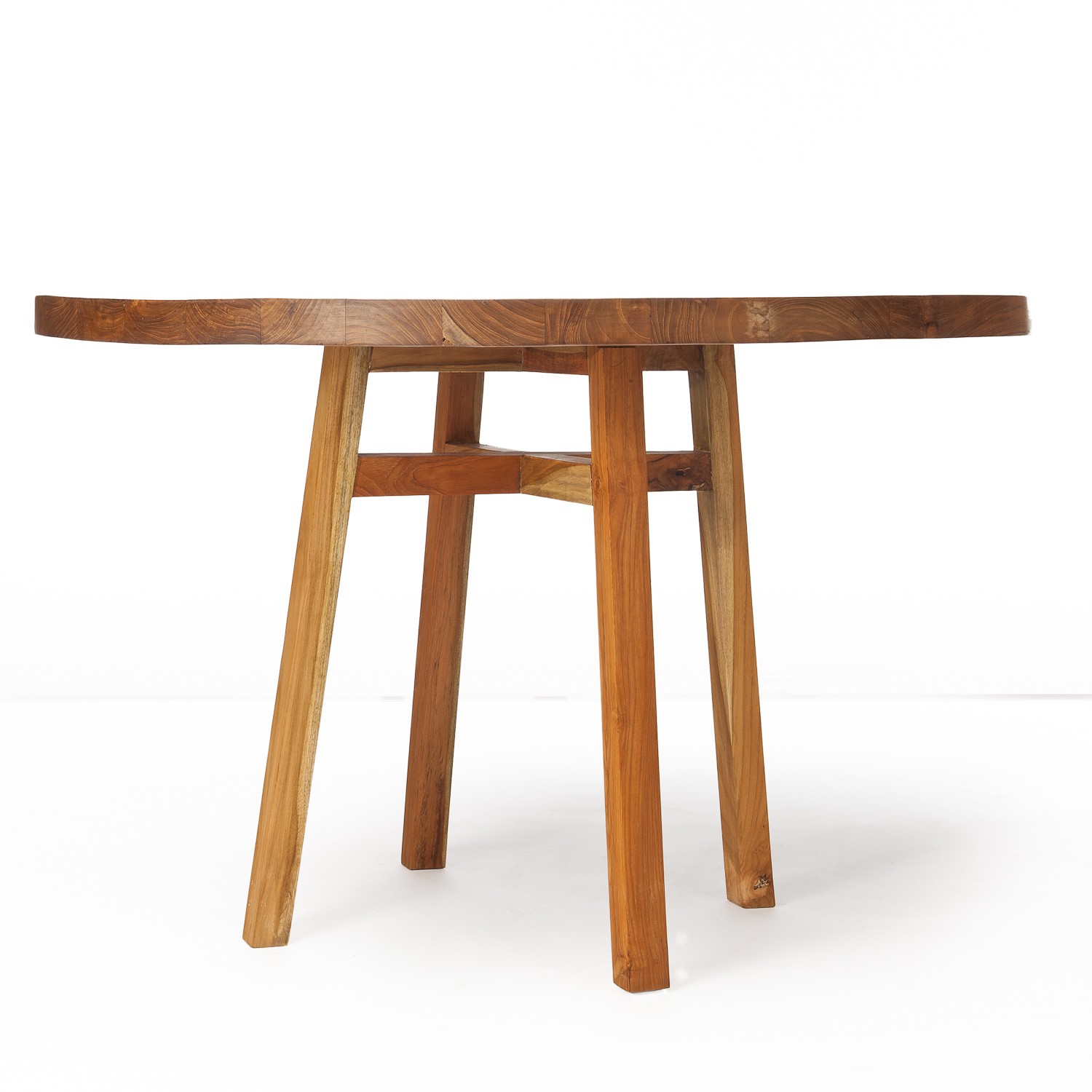
A round design removes sharp corners and is forgiving in a crowded corner. It also suits the café-inspired furniture common in Australian homes, where compact breakfast spots often borrow from outdoor café styling. A pedestal base leaves more visible floor than four splayed legs.
A folding or nesting set gives you seating only when needed and can be stored against a wall. A slim rectangle can align with the railing, but its users still need clear space behind them. For the Australian habit of weekend alfresco entertaining, position the surface near the kitchen door and treat it as a serving station as well as a place to eat.
Choose materials for local weather
Powder-coated aluminium is light, rust-resistant and easy to move, while exterior-grade teak or hardwood can develop a handsome patina. Treated pine is often the budget-friendly choice in Australian stores, but it needs regular sealing, careful drainage and protection from standing water.
Summer sun and sudden rain are normal, and coastal locations add another test. In Brisbane’s humid weather, and around Sydney’s saltier shoreline, check fasteners, joinery and finish for corrosion resistance. Compare products at local suppliers such as Bunnings, IKEA Australia or Fantastic Furniture, and confirm the dimensions and warranty before paying for delivery.
Pair seating with hidden utility
A storage bench can replace two chairs while hiding cushions, seed packets and garden tools beneath a lift lid. Add nesting chairs if the bench is too deep for the space. Keep the lid or drawer access clear, and never store damp textiles in a sealed compartment.
The same compact-storage logic appears in nursery furniture: this changing table guide explains how drawers, hinges and lift mechanisms can make a small footprint work harder. The useful lesson is mechanical, not simply adding more furniture to a tiny room.
Grow upward instead of outward
Use vertical space with railing shelves, slim wall-mounted planters and hanging baskets rather than filling the floor with large pots. A tabletop tray can hold compact rosemary, thyme, oregano or native grasses, but check pot weight and drainage before placing anything beside a seating edge.
Choose plants suited to your balcony’s actual sun, wind and watering routine. Compact rosemary and thyme suit bright, warm spots, while coastal natives may tolerate more exposure. For a visual mood board, photograph your own balcony and confirm permission before sharing images; the site’s copyright guidelines outline appropriate use of online material.
Weigh the strongest options
Use the chart below to compare footprint, seating capacity, weather resistance and storage value. Measure the product, not just the listing photograph, and include the space needed to open lids or move folded frames.
| Option | Typical size | Best fit | Weather-ready choice | Main compromise |
|---|---|---|---|---|
| Round bistro | 500–650 mm diameter | One person or a snug pair | Powder-coated aluminium | Occupies a permanent footprint |
| Narrow rectangle | 800–1,000 × 450–550 mm | Two opposite seats | Sealed timber or treated pine | Requires chair pull-back space |
| Folding or nesting set | 500–700 mm wide | Movable café-style seating | Coated steel or aluminium | Less storage when folded |
| Storage bench | 1,000–1,200 × 450–550 mm | Seating plus hidden storage | Exterior-grade timber or composite | Needs clear front access |
For a genuinely tiny balcony, a 600 mm round bistro model with folding chairs is often the least disruptive choice. If the floor is longer than it is wide, choose the narrow rectangle and push one side against the railing. Before checkout, check delivery access through the apartment, assembly requirements and the retailer’s Australian return policy.