Balancing a round coffee table with a square rug
A round coffee table and a square rug create a useful contrast: the table softens the rug’s corners, while the rug gives the room a clear centre. The result can feel relaxed and ordered at the same time, provided their scale and placement agree.
Success depends less on matching shapes than on visual weight. A substantial round table can balance a large square rug, while a slim table may look undersized on the same rug. Circulation, colour and the surrounding chairs complete the equation.
Many Australian homes have to make this pairing work in an open-plan lounge rather than a generously separated sitting room. Sydney and Melbourne apartments, in particular, often reward compact layouts that preserve an easy route between the kitchen, television and balcony doors.
Start with the room’s everyday use. Families may gather around the table for cards, help with homework or place a tray of drinks on weekend lunches, so comfort and flexibility matter more than a perfectly symmetrical arrangement.
How the contrasting shapes work
A square rug establishes straight edges and a confident footprint. A round coffee table interrupts that geometry, making the seating group feel less formal and easier to move around. This is especially helpful when the sofa is straight-lined or the room contains many angular cabinets.
The table should not fight the rug for attention. A dark, heavy pedestal base can feel more grounded against a pale rug, while a pale timber top can disappear against a richly coloured one. For related inspiration, a guide to sculptural side tables shows how smaller curved forms can extend the room’s softer geometry.
Getting the proportions right
A square rug should extend beyond the main seating, not merely peek out from beneath the table. As a useful guide, place the front legs of the sofa and occasional chairs on the rug. For a compact three-seat sofa, a 160 x 160 cm square rug with a table around 75 to 90 cm across can create a comfortable group.
Australian furniture is usually sold in metric sizes, but imported rugs can use different labelling. In a Sydney or Melbourne apartment, measure the lounge before choosing: a 160 cm square may suit a small three-seat sofa, whereas a 200 cm square gives a larger seating group more breathing room. The wider Boundless Table Ideas collection offers further examples of layouts built around different table types.
Positioning for clear movement
Centring the rug with the sofa creates a stable base, then the round table can sit slightly forward to make conversation easier. Leave roughly 75 to 90 cm between the table and the main walking route, especially where the lounge connects to a hallway or kitchen. That space matters more than a magazine-style centrepiece.
Watch the rug’s edges in busy households. A corner caught under a chair leg may lift with daily use, and an exposed edge can curl in dry weather. Furniture coasters, a secure underlay and regular vacuuming help the square shape stay flat and clean.
Choosing materials for Australian conditions
Strong sunlight and humidity affect rugs and timber differently. Australian wool rugs are widely available and naturally resilient, while polypropylene is easier to clean where spills are frequent. Natural jute and sisal feel relaxed beneath the round table but can stain or absorb moisture, so they are better choices in a dry, low-traffic lounge.
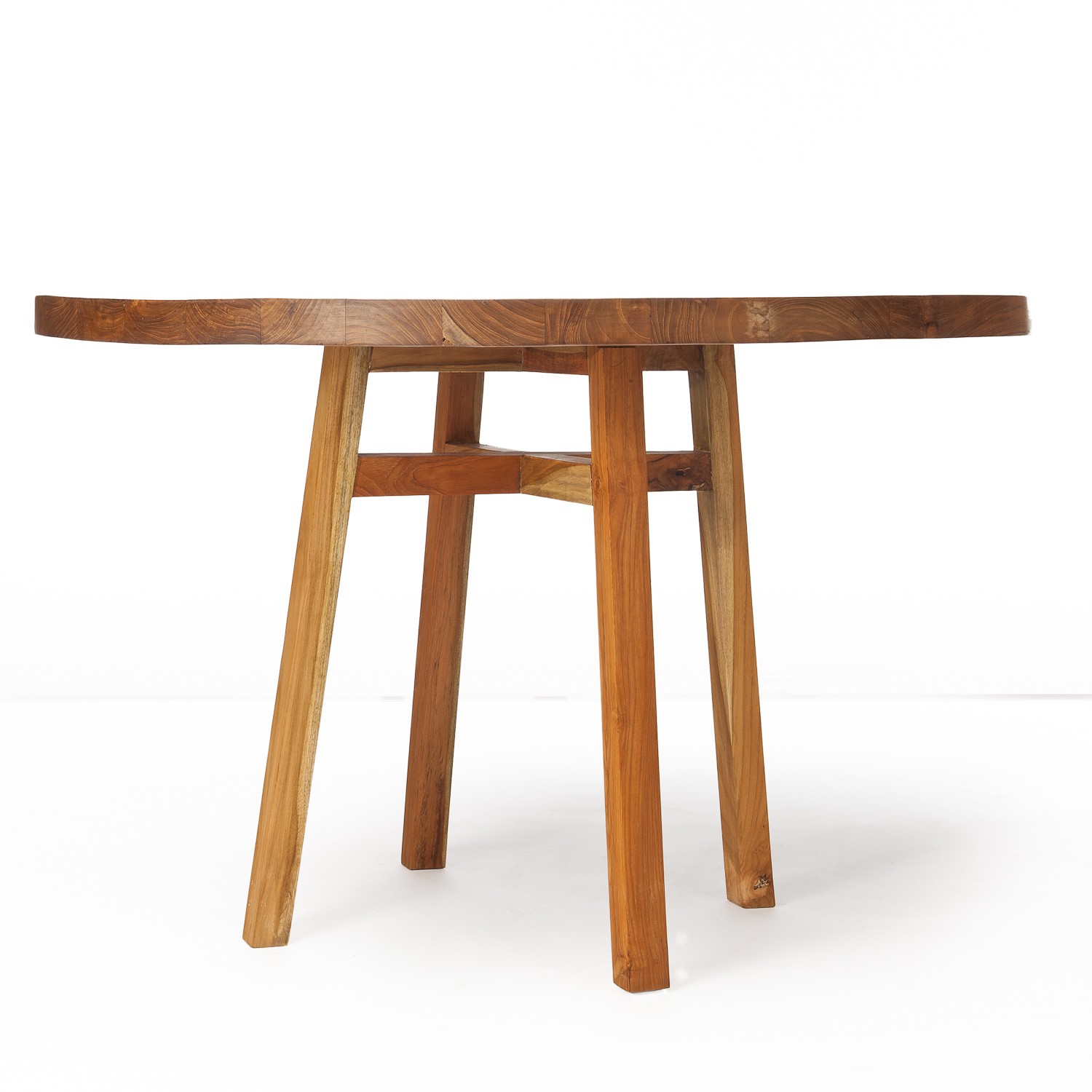
For the table, solid hardwood or well-finished timber board can handle daily use better than an untreated surface. Australian makers offer locally made furniture and reclaimed timber pieces that sit comfortably beside a timber sofa or sideboard. Coastal homes may need extra attention to salt and damp, so check the finish and wipe spills promptly.
Styling the seating group
Let the rug carry the room’s base colour, then repeat small tones in cushions, throws and artwork. A round tray, shallow bowl or stack of books on the table adds another circle without making the arrangement feel rigid. Keep the tabletop partly open so it remains useful for cups, controllers and homework.
The coffee table should relate to the side tables and lamp bases without copying them exactly. Matching everything can flatten the contrast between the square rug and round table. Instead, vary height and texture: a low table, a slim lamp and a textured cushion create interest while the rug keeps the grouping unified.
Building a practical final arrangement
Mark the rug and table footprint with masking tape before buying. Tape a square for the rug and a smaller circle for the table, then walk around the arrangement with a phone in hand to check the usual route from the front door to the kitchen. This simple test often reveals a need for a smaller table or a shifted chair.
Check delivery access, assembly requirements and the supplier’s lead time, especially for a wide pedestal or sculptural base. For online enquiries, check the retailer’s privacy policy before sharing personal details. Once everything is in place, the square rug should define the seating zone while the round table keeps it easy-going and comfortable.